
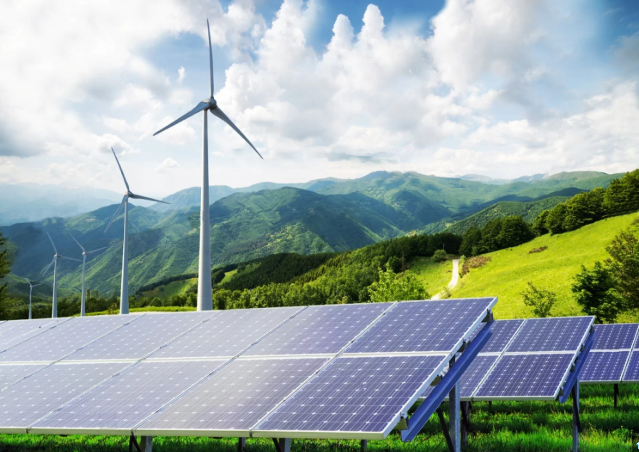
India is making high jumps in Green-Tech innovations. Green clean energy devices and sustainable solutions are no longer niche, they are rapidly moving into the mainstream. India uses innovations to try and achieve its ambitious climate goals and deploys clean energy devices like advanced batteries and green hydrogen, smart solar systems, and waste to energy technologies. All of this is possible due to the rapidly expanding niche climate technologies. This article discusses the most compelling clean energy devices and innovations in India during this past year, the drivers of such innovations, real-world use, and what businesses, consumers and investors will be watching for.
Why Green Tech Devices Are Critical for India
India’s energy and environmental challenges are vast:
- India aims to reach its target of 500 GW of non-fossil fuel energy by 2030.
- It also confronts growing demand for electricity, the need to decarbonize heavy industry, and the imperative of sustainable growth.
- Clean energy devices—such as batteries, hydrogen electrolyzers, solar modules, smart meters—enable the transition from fossil fuels to renewables, improve grid reliability, and support distributed generation.
- Moreover, India’s push to manufacture and adopt these devices domestically means opportunities for innovation, job creation, local supply chains and export potential.
Thus, green tech devices are not an after-thought—they’re central to India’s climate, energy security and industrial strategy.
Key Device Innovations & Clean Energy Technologies in India 2025
Here are some of the most important clean-energy devices and technology trends shaping India in 2025:
1. Advanced Energy Storage & Next-Gen Batteries
One of the major bottlenecks for renewables is intermittency—often solved via energy storage. India is seeing innovations in battery technologies, including sodium-ion batteries and aluminium-air fuel cells. For example, Indian firm Log9 Materials is developing aluminium–air battery and fuel-cell systems suited for mobility and stationary storage.
Similarly, next-gen storage drives cleaner integration of solar/wind. The “long-duration energy storage” (LDES) concept is gaining traction globally, and applies in India’s context too.
2. Rooftop Solar & Hybrid Renewable Devices
Rooftop solar devices (PV panels, inverters, hybrid systems) continue to scale. Indian trade publication lists rooftop solar expansion, wind-solar hybrid systems and smart grids as key trends for 2025.
A notable innovation: bifacial modules in agrivoltaic and vertical applications — research at IIT Bhilai found that East-West facing vertical bifacial modules can produce more in certain Indian conditions.
3. Green Hydrogen & Electrolysers
Green hydrogen is emerging as a key clean-fuel device—especially for hard-to-abate sectors like steel, cement, refining and heavy transport. India’s National Green Hydrogen Mission and private investments spearhead this.
For example, an off-grid green-hydrogen pilot plant by Adani New Industries Limited in Gujarat demonstrates device-level innovation in electrolysis and hydrogen production.
4. Smart Grid Devices, IoT Sensors & Energy Management
Making the grid “smart” requires devices – IoT sensors, smart meters, analytics hardware, embedded intelligence. India’s clean-energy trend sheet highlights “smart grids and digitalization” as a device-driven innovation.
Startups like WEGOT Utility Solutions are deploying IoT-powered water/energy monitors across cities, showing how device innovation extends beyond power generation.
5. Circular Economy & Recycling Devices
Clean-energy devices also include technologies that recycle or repurpose – such as e-waste sorting robots, battery-recycling plants, and waste-to-energy units. Indian startup BatX Energies is designing closed-loop battery-recycling systems, recovering key metals for reuse.
Real-World Use Cases in India: Clean Energy Devices Making an Impact
Solar Village & Off-Grid Device Systems
The village of Modhera in Gujarat has become India’s first solar-powered village running 24/7 on renewable energy plus storage. Rooftop panels + a 15 MWh battery storage system form the device backbone of that transformation.
This showcases how devices (solar modules + storage) deliver tangible energy access outcomes.
Industrial & Mobility Applications
Exicom’s “Harmony Direct 2.0” DC-fast charger, combining solar, storage and grid support, is a device innovation supporting India’s EV mobility transition.
Beyond mobility, heavy industry is adopting device-level solutions for decarbonisation (hydrogen electrolysers, renewable power modules) aligning with India’s green targets.
Smart Buildings & Energy Efficiency
Research at IIT Bhilai on smart polymer device coatings that reduce cooling needs while generating power reveals how device innovation helps energy efficiency.
Such device-solutions for building façades, self-cooling materials and integrated energy generation show the breadth of green tech devices beyond just “solar panels”.
What’s Driving Green Tech Device Adoption in India in 2025
Several enablers are propelling device innovation and uptake:
- Policy & Incentives: PLI (Production Linked Incentive) schemes for solar modules, battery manufacturing, electroliers; targets for renewable capacity.
- Falling Costs & Scale Effects: As manufacturing scales, device costs drop enabling wider adoption.
- Domestic Manufacturing Push: India emphasis “Make in India” for green tech devices — from solar modules to batteries to hydrogen electroliers.
- Technological Innovation: Indian startups are innovating devices tailored for Indian conditions (heat resilience, dual-land-use solar, circular devices).
- Investment & Global Supply Chains: Large investments (e.g., USD 2.57 billion by Renew Energy Global for hybrid solar/wind in Andhra Pradesh) show the ecosystem is scaling.
Challenges for Device-Driven Clean Tech in India
Even as device innovation accelerates, India faces hurdles:
- Manufacturing Capacity & Supply Chain Gaps: For batteries, electrolysers, advanced storage devices, some critical raw materials (like lithium, cobalt) or manufacturing equipment are still imported.
- Grid Integration & Device Reliability: Devices such as storage systems must reliably integrate with grids—issues of interconnection, policy, testing persist.
- Land & Deployment Infrastructure: For solar/wind/hydrogen devices deployment often requires large areas, infrastructure investment, logistics readiness.
- Finance & Business Models: Devices often have upfront cost burdens, and business models must support device financing, leasing, pay-as-you-go models especially for emerging markets.
- Skill & Maintenance Ecosystem: Device deployment must be backed by local maintenance, standards, quality assurance—especially for novel devices.
Strategies for Businesses & Investors in Device Innovation
If you’re a business, startup or investor looking at green tech devices in India, here are smart strategies:
- Focus on Device Use-cases Tailored to Indian Conditions
For example, devices optimized for Indian heat, dust‐resilience, dual land-use (solar + agriculture) have edge value.
- Target Cross-Device Integration
Devices rarely stand alone—solar module + storage + smart inverter + IoT sensors form a system. Solutions that integrate devices across the stack win.
- Leverage Local Manufacturing & Support Ecosystems
Devices that can be manufactured locally (or assemble locally) gain cost advantage, policy incentives and faster deployment.
- Adopt Circularity & End-of-Life Strategies
Devices in clean tech must address end-of-life, recycling, reuse—battery devices, e-waste devices are prime domains.
- Mitigate Deployment Risk Through Pilot Projects
Device innovation benefits from pilots and proof-of-concepts (solar village, industrial micro-grid, hydrogen fueling stations) before scaling.
- Explore Financing & Business Model Innovation
Leasing, subscription models, pay-as-you-go for devices make adoption viable for more users (residential, commercial, industrial).
Outlook for 2025 and Beyond
Looking ahead, the momentum for green tech devices in India will accelerate further:
- Device costs will keep falling thanks to scale, innovation and localization.
- Deployment of storage‐paired solar, hybrid renewable systems and green hydrogen devices will expand rapidly.
- Smart devices enabled by IoT/AI for energy efficiency (smart meters, building management devices) will become ubiquitous.
- Circular economy devices (battery recycling, e-waste sorting) will scale, addressing sustainability of devices themselves.
- India will increasingly become an export hub for specific clean-energy devices suited to South Asia, Africa and other emerging markets.
- Because devices are the physical manifestation of the green tech transition, their manufacturing, deployment and integration will be key to India meeting its climate and energy targets.
Conclusion
The immense potential India holds with green tech innovations comes down to one device. Whether we’re looking at rooftop solar modules, advanced batteries, hydrogen electroliers, smart energy management sensors, or even waste-to-energy devices, all play a role in shifting India to a clean energy future. These devices are a vital part of the green growth policy and turn India to a clean energy future.
The remarkable growth of India’s green revolution on the device front has created opportunities for everyone—start ups, investors, businesses, policy makers and even the local market.